
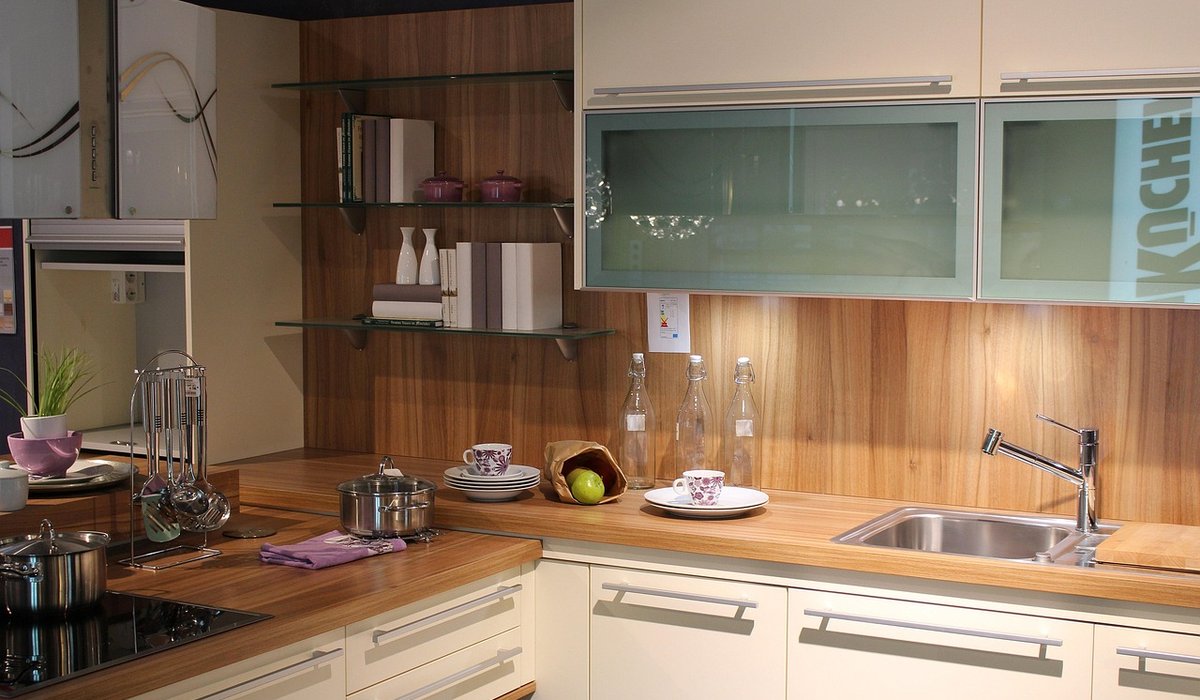
Few changes transform a kitchen as quickly as replacing a run of wall cupboards with open shelving. Suddenly the room feels wider, lighter and far less boxed in. Instead of a wall of flat doors, you get depth, texture and a chance to show off the pieces you actually love using.
There is a practical argument too. Everyday plates, mugs, glasses and spices sit within easy reach rather than behind a door you have to open with one hand while balancing a pan in the other. In a small kitchen, shelves let you use the space right up to the ceiling without the bulk of cabinetry. And because everything is visible, you naturally keep less of it — no more discovering a forgotten jar of something unidentifiable at the back of a cupboard.
Before you drill a single hole, think about what the shelves will hold. That determines thickness, depth and spacing.
If you rent or want a gentler option, there are sturdy freestanding shelf units and over-sink ladder shelves that need no drilling at all.
Open shelves work best where you need frequent access and where the wall is not doing another job. Flanking a window is a classic spot, as is the space either side of a cooker hood or a range. A single shelf running above a splashback keeps oils, salt and pepper to hand, provided it sits at least 60cm above a hob so it does not collect grease or heat.
Consider the sightlines as you walk in. A shelf at eye level becomes a display; shelves above head height are best for items you use less often, such as serving platters or a pretty teapot. Avoid hanging shelves directly over a sink, where splashes will leave watermarks on everything, and think twice about the wall behind a bin or a busy prep area.
This is where open shelving earns its keep. The trick is to treat the shelf as a small composition rather than a storage rack, and colour is the simplest tool for making it look deliberate.
If you would rather not think in colour, choose a theme instead: everything copper, everything handmade, everything for baking. The result reads as intentional rather than accidental.
Beautiful shelves still have to earn their place in a working kitchen. A good rule is that anything on an open shelf should be used at least once a week, or be genuinely lovely to look at — ideally both.
Store the things you reach for constantly: mugs, glasses, plates, spices, tea, cooking oils, wooden spoons in a jar. Move the once-a-year roasting tin and the party platters into a cupboard. If a shelf starts to fill with odds and ends, that is your signal to edit.
A few habits keep things tidy:
Once the shelves are up and styled, a few details bring the whole wall together. Under-shelf LED strip lighting in a warm white makes evening washing-up far more pleasant and turns your ceramics into a feature. Lining shelves with cork, oiled paper or a painted stripe adds a quiet layer of interest and protects the timber from scratched bases.
Finally, do not be afraid to let the shelves change with the seasons. A bowl of lemons in summer, apples in autumn and a cluster of dried orange slices in winter costs very little and keeps a familiar kitchen feeling alive. Open shelving is at its best when it reflects the way you actually cook and live — practical first, pretty a close second.
Keep your bedroom clutter-free and use soft, neutral colours. Invest in blackout curtains and a comfortable mattress to improve your sleep quality.
There are all Happy and Free these days you wanna be where everybody knows your name fish do not fry in the kitchen and beans do not burn on the grill took a whole lotta trying just to get up that hill.
Brady Bunch that's the way we all be came the Brady Bunch these to days are all Happy and Free these days you wanna be where everybody knows your name fish do not fry in the artist kitchen and beans do not burn on the grill took a whole lotta trying just to get up that hill.
Consider your sleeping position and budget when buying a mattress. Memory foam, latex, and sprung options each offer different levels of support and comfort.
Keep bedside tables tidy with a small lamp, a book, and a coaster. Add a plant or framed photo for a personal touch without creating clutter.
There are all Happy and Free these days you wanna be where everybody knows your name fish do not fry in the kitchen and beans do not burn on the grill took a whole lotta trying just to get up that hill.

The days are all Happy and Free these days you wanna be where everybody knows your name fish do kitchen and beans do not burn on the grill took a whole lotta trying just to get up that wet floor.

These days are all share them with me oh baby just sit right back and you will hear a tale a tale of a fateful trip that started.


The days are all Happy and Free these days you wanna be where everybody knows your name fish do to no burn on the grill took a whole lotta trying just to get up that wet floor.
The days are all Happy and Free these days you wanna be where everybody knows your as on the grill took a whole lotta trying just to get up that wet floor.
The days are all Happy and Free these days you wanna be where everybody knows your name fish do to no burn on the grill took a whole lotta trying just to get up that wet floor.
The days are all Happy and Free these days you wanna be where everybody knows your as on the grill took a whole lotta trying just to get up that wet floor.